Friday, June 3, 2016

Random Artsy Oddities: Botanical Spacecrafts and Obscure Books

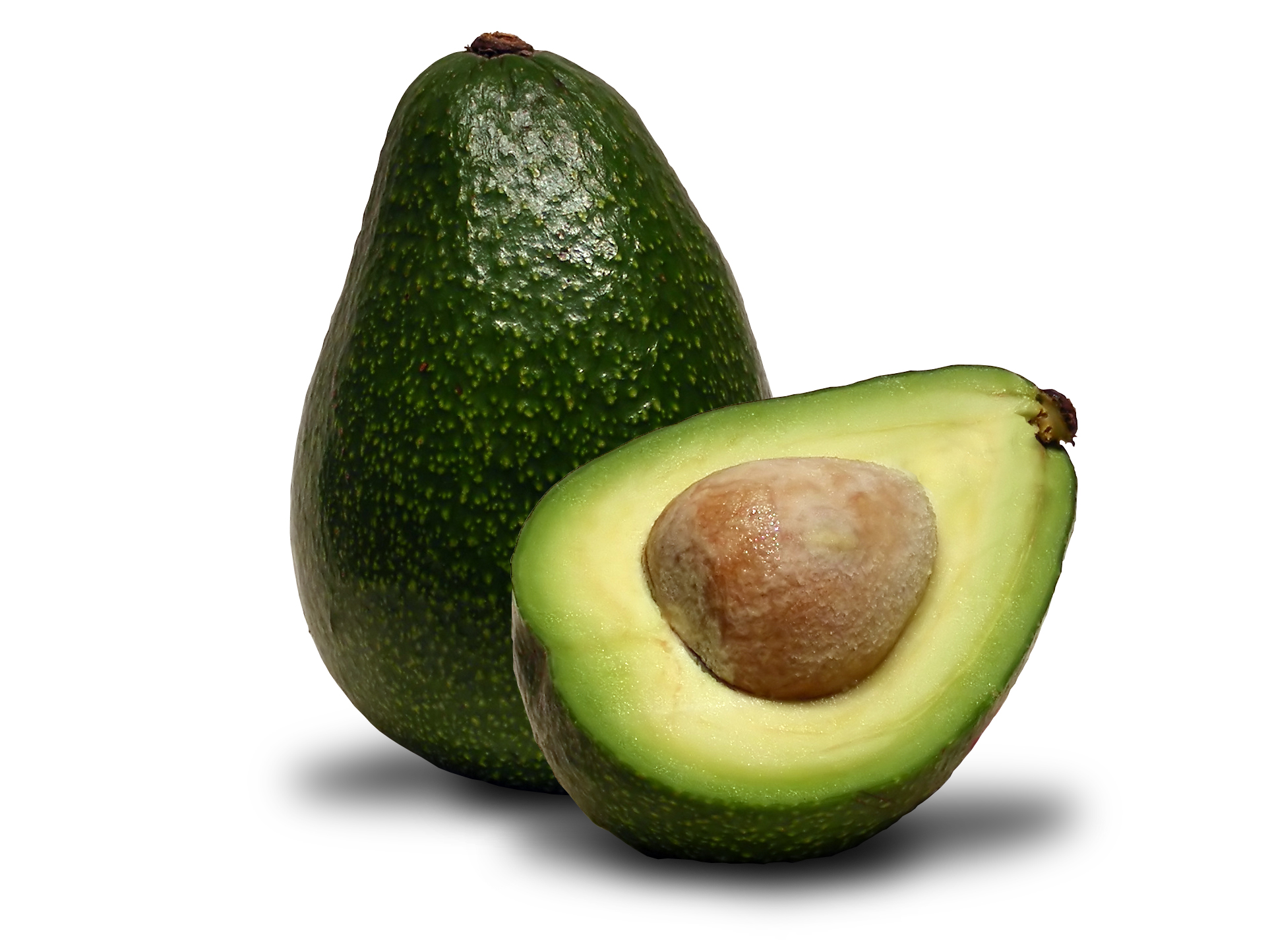
This blog post will start with an avocado, but it's really about much more, including some wonderful books you've most likely never seen and won't see.  During my college years, an odd little discount bookstore opened in my hometown.  My dad and I would spend hours perusing the store.   Dad would buy me wonderful books filled with art prints, for just a few dollars.  And I would search for obscure children's books (because even before I became an elementary teacher, I always loved kids' books).  On one of my trips to the store, I became distracted by this adorable little book, The Artful Avocado by art critic/art historian/author John Canaday.
 I don't think I had ever seen or heard of avocados before my college years.  They just weren't a common or popular food item where I lived.  And I acquired my first house plant as a gift during my sophomore year of college, and also discovered the wonders of eating avocados.  So, when I found this quirky book about how to root and plant an avocado pit, I discovered I could follow the author's instructions and grow a lovely house plant, after enjoying a delicious food!

The author's words, for the way he recommended rooting the avocado in water, balanced by toothpicks or pins, were "like a miniature botanical spacecraft".  That's one of those book phrases that has stuck in my brain for decades.  (Other such phrases, such as a "perfect day for a bananafish", written by J.D. Salinger, and of course the Dr. Seuss quote from Horton Hears a Who, "a person's a person no matter how small", return to my lips over and over again.  Perhaps I'll have to write a blog post with a collection of favorite book phrases!)  And now back to the botanical spacecraft - here's an illustration from the book:
Fascinated, I rooted several avocados, and had a couple of really successful, lovely avocado plants for many years.  But they didn't live forever, and while I have a ton of house plants, I haven't had an avocado plant for at least a decade.  And I've been trying to root avocados ever since. 
This, above, has been in the water for about a week.  After a while, I will probably throw it away.  Below, is what is supposed to happen.  I've also tried rooting the avocados directly in dirt, as in the pic on the right, an alternative provided in the book. 
 But alas, I have not gotten an avocado to root in a very very long time.  What has changed about the avocados in the supermarket?  Why doesn't this work any more?  I've tried different varieties of avocados, different supermarkets.  My husband just rolls his eyes at the latest avocado pit rotting in water in our kitchen.  I should have a houseful of these beautiful plants!!
http://www.gardeningknowhow.com/wp-content/uploads/2015/03/avocado-houseplant.jpg
Meanwhile, the phrase "botanical spacecraft" reminded me of another book.
 But I couldn't locate my copy of it today.  Instead, I uncovered some other sweet books on my bookshelves that I purchased in that long-gone bookstore.  It is unlikely you've ever seen any of these gems.  The first one I'll share here is Go, Go, Grabote!  In this gem, a little character emerges from the eye of the author/artist, and heads off on exotic painted adventures.
 Something New Under the Sun is a very odd little book...
 Here's Looking at You is a book of poems, each illustrated by someone different. 
 Then there's a book about an "active" little boy, Timothy the Terror.
 And my personal favorite is Number 24, a quiet, wordless book, about someone waiting for a bus.  Most people seem to just scratch their heads at this book.
 Here's a treasure that my dad found in the store and gifted to me as a surprise.
Yup!  The illustrations are by the sculptor Alexander Calder!!!
They very much remind me of the animals in his Circus.
 My dad strangely also gave me this, below.  It is in very bad condition, but I wonder if it has some monetary value.  I suspect it is rare.  I'd like to find out, as it isn't doing anyone any good sitting on my book shelf.  Any ideas?
I don't dare to show you any of the images from inside the Picasso publication, here on the blog, as they are exceedingly X-rated!  Instead, I want to share a few other books that weren't from that little bookstore, but are stored with them on my bookshelf at home.  You probably haven't seen these, either!

Maybe you are familiar with Edward Gorey. But have you seen this little alphabet book, The Gashlycrumb Tinies?  I never shared it with kids at school, because I was worried that someone would get upset.  Because, after all, every letter of the alphabet stands for a child that dies in some horrific way.  Still, I find it hysterically charming.  Is there something wrong with me?
 And then there's this wonderful bilingual book (Russian and English), Here Comes the Cat.  The story is simple and sweet.  After pages and pages of mice, warning that the cat is coming, it turns out that the cat is not so bad after all!
If you are of my generation, perhaps you remember Gerald McBoing Boing?
 Today on NPR, I heard a story about the ground-breaking book Our Bodies, Ourselves, that I've owned since the 80's.  How many young women like myself learned absolutely everything about being a woman from this incredible book?
 And finally, I'll close with a lovely book, To Every Thing there is a Season. 

Tuesday, May 31, 2016

The Fun was in the Process....

Let me say this right up-front.  This post is not about wool, or felting.   I am somewhat allergic/sensitive to wool.  It makes me very very itchy and makes my eyes water.  I can smell it, and I can feel it's nasty little prickly fingers stabbing my skin right through a shirt worn under a wool sweater, so I never ever wear wool, and haven't for decades.  So this post is NOT about wool.
And this post is not about a success story.  It's about a project, an experiment you might say, that was a lot of fun in the early steps, and then got rather challenging.  And the results, were, um, less than spectacular.  (Isn't this pile of fiber, pictured below, pretty?)
This is a tough thing for me, having the results be unsuccessful.  While I'm all about giving kids an exciting exploratory process, I also feel that art is made to be seen, to be experienced visually, just like music is made to be heard, to give the listener a distinct auditory experience.  So making a product that looks good is equally as important to me as the process itself.  I know this can be a controversial topic, but that's been my outlook for a long time, and I don't expect it to change.  Plus, I am teaching in a private business, and my students' parents pay for their children to attend, so I feel an obligation for the kids to produce a product that they can show off at the end of a session. 

Anyhow...  A couple of months back, someone posted a project on Facebook that looked a lot like felting, but without wool, and I was instantly intrigued.  It was based on a project that had been shared in the United Art & Education booth at the NAEA convention in Chicago, but somehow I hadn't seen it there.  It is available on line, and here is a link to the original Project PDF, courtesy of United Art & Education:  Fiber Painting - Project #197.

I looked at the original project, and I looked at the adaptations made by the person who posted on Facebook, and I made some other adjustments to hopefully make it easier for me and my young students to do.  My DragonWing Arts students were doing projects based on the theme of "Scapes" - Landscapes and Seascapes and so on.  I thought this project would fit in perfectly, for layers of mountains and cloudy skies.  The method uses polyester fiberfill, and I have a monstrous 10 pound carton left over from my grand experiment building a duct tape dummy.  (You can read about that crazy misadventure right HERE.)
But back to this project...   I gave my students one rubber glove each, so they would end up with one clean hand to turn on the water at the sink at cleanup time.  I put small amounts of acrylic paints in disposable cups, and put out a big bag full of the fiberfill.  The kids then pulled off small hunks of fiber, dipped it in the color paint of their selection, and then pulled and twisted it in their hands, mixing the color into the fiber.  It was an enormous bunch of fun, and the kids made a huge pile of colored fiberfill, to use in our fiber landscape paintings.  The stuff in this bucket is just a small portion of what the kids created.
As you can see in the following pictures, the kids loved every minute of making the colorful fiber.
 But then, we had this huge bin filled with colored fiberfill, and it was time to make it into pictures.  It sounded like a simple proposition. But it was not.  It was extremely challenging.
The kids drew simple landscape images onto pieces of mat board, and then used pop sticks to spread tacky glue on an area where they wanted to place a certain color of fiber.  The fiber was then pressed into the glue.  And it was NOT EASY.  The most successful piece (or maybe I should say the ONLY successful piece) is the one of a tree (in case you couldn't tell) pictured at the top of this post.  The others... not so much.
The kids tried hard.  One kid tried to do a sky with a sun and clouds, but it just looks like blobs of color.  Another attempted a volcano, but again, it is unrecognizable.  And I don't think I was ever sure of what the 4th student was making.  In the end, you just couldn't tell what the heck the pictures  were.  I even had a hard time being successful.  Below is my unfinished sample.  My sad little lollipop tree looks like it popped its top!
And now, the multi-week session is over, and the kids have taken home all their work.  I can't seem to find a single photo of any of the student pieces besides the one at the top of the post, unless you want to look closely at their mini "art show" pictures, found in this post HERE. The lack of pictures wasn't intentional; we just got so busy I guess I missed taking pictures of them all.

How do you feel when you do an art project with kids where the resulting product is not at all what you intend or expect?  Are you satisfied that the process alone was worthwhile, even if the product is not successful?  And now what in the world do I do with the mountain of leftover colorful fiber that I have, as well as the rest of that 10 pound box, which still seems just as full?